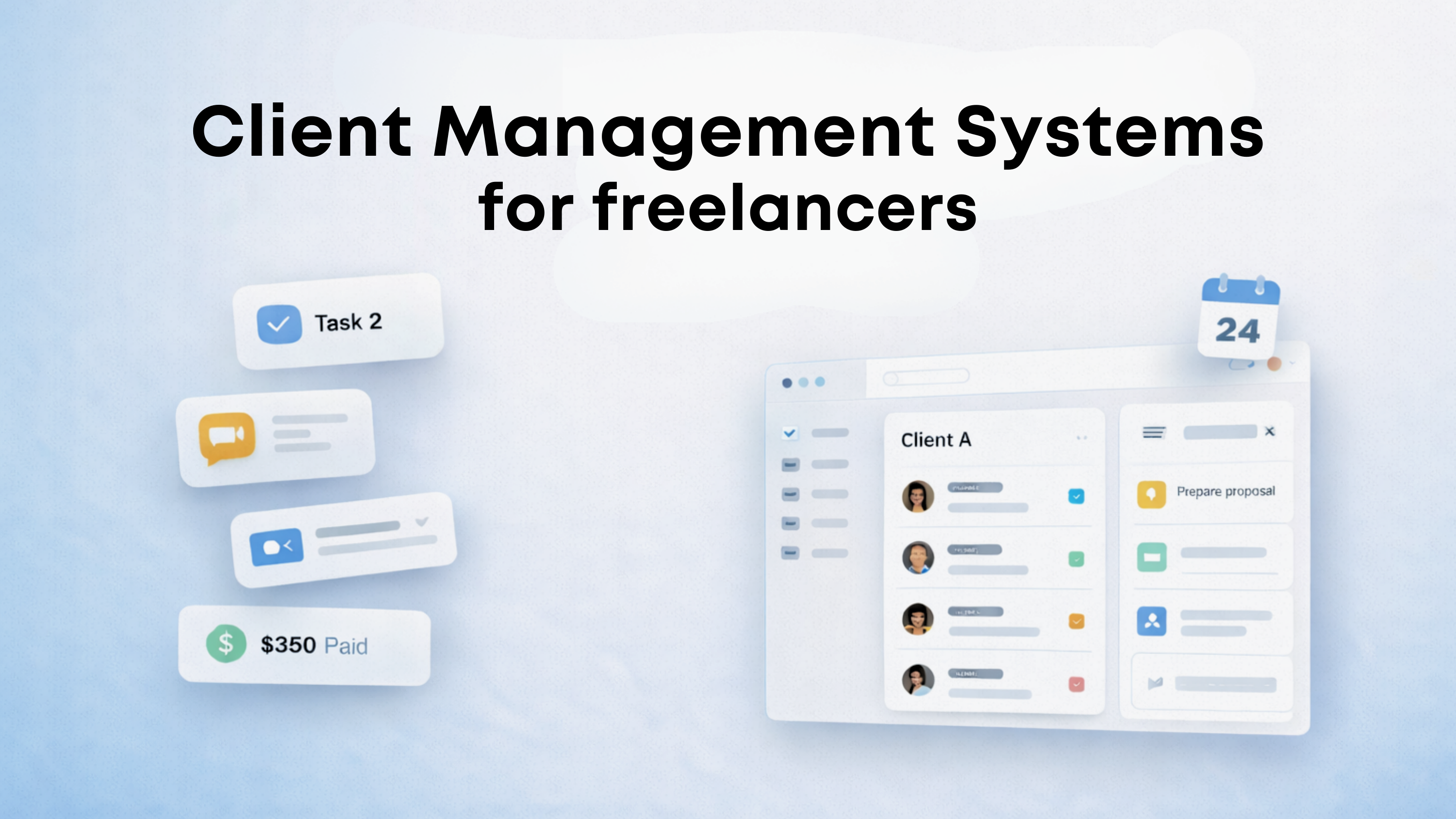
Client Management Systems for Freelancers
Freelancing gives you freedom, but managing clients does not always feel simple. As clients grow, structure becomes the difference between chaos and control.
Introduction
Freelancing gives you freedom. But managing clients does not always feel simple.
As the number of clients increases, things start to change. Messages come from different platforms. Tasks get scattered. Deadlines overlap. Follow ups are missed.
At some point, it stops feeling like work and starts feeling like pressure.
The problem is not the number of clients. The problem is managing them without a system.
Why Client Management Becomes Difficult
In the beginning, everything feels easy.
You remember conversations. You track tasks in your head. You respond quickly.
But this only works when the workload is small.
As more clients come in, this approach starts to fail.
Communication is spread across WhatsApp, email, and calls. Tasks are written in notes or remembered. Deadlines are tracked manually.
Nothing is connected.
The result is predictable:
- Missed updates
- Delayed responses
- Confusion in work
- Increased stress
The issue is not workload. The issue is lack of structure.
Why Adding More Tools Does Not Help
Most freelancers try to fix this by using more tools.
One tool for communication. One for tasks. One for payments.
This seems helpful at first. But over time, it creates a new problem.
Everything is still disconnected.
You are not managing better. You are just switching more.
What is a Client Management System
A client management system is a single place where all client related work is managed.
This includes:
- Communication
- Tasks
- Deadlines
- Payments
- Updates
Instead of using multiple tools, everything is handled in one system. This reduces confusion and improves clarity.
What a Good System Should Do
A proper system is not just about storing information. It should make your work easier.
1. Keep Communication in One Place
No need to switch between platforms. All conversations stay connected to the work.
2. Make Tasks Clear
You should always know:
- What needs to be done
- What is completed
- What is pending
3. Show All Clients in One View
You should be able to see all clients and projects without searching.
4. Handle Payments Clearly
Invoices and payments should not be tracked separately.
5. Reduce Manual Follow Ups
Reminders and updates should not depend on memory.
Why This Matters as You Grow
Managing one or two clients is manageable. Managing five or more becomes different.
More clients means:
- More communication
- More tasks
- More deadlines
Without a system, everything becomes difficult to control. Growth starts creating pressure instead of progress.
The Shift That Changes Everything
The real change happens when you stop managing everything manually. Instead, you build a system that handles the work.
A structured system allows:
- Information to stay organized
- Tasks to be visible
- Progress to be clear
- Work to be predictable
You stop reacting to work. You start controlling it.
Where COLO Fits In
COLO is built for this exact problem.
Instead of using multiple tools, everything is managed in one place. Clients, tasks, communication, and payments are connected.
You do not have to switch between platforms. Everything stays structured.
Final Thoughts
Freelancing does not have to feel chaotic. But without systems, it often does.
The difference is not how much you work. It is how your work is structured.
When you have a system:
- Work becomes easier to manage
- Clients become easier to handle
- Growth becomes sustainable
Without a system, more clients create chaos. With a system, more clients create control.