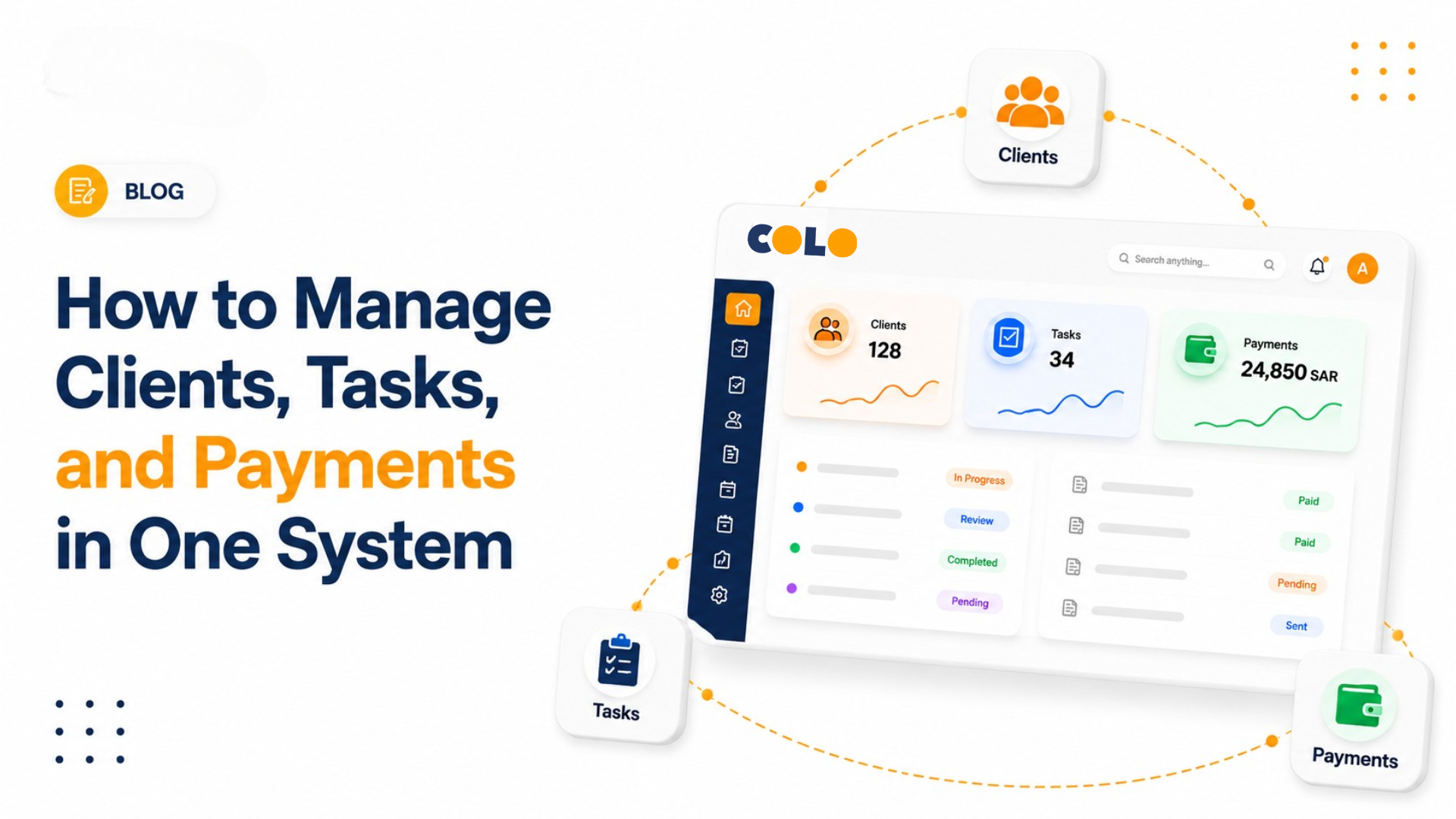
How to Manage Clients, Tasks, and Payments in One System
Clients, tasks, and payments look like separate processes — but they're deeply connected. Managing them in one system removes the friction that grows with your business.
How to Manage Clients, Tasks, and Payments in One System
Running a freelance business or agency often starts with a simple setup. You have a few clients, a handful of projects, and a manageable workload.
But as your business grows, so does the complexity.
Client conversations happen in one place. Tasks are tracked somewhere else. Payments are managed through separate tools. Before long, managing operations becomes more difficult than delivering the actual work.
This is one of the biggest challenges freelancers and small businesses face today.
The solution is not necessarily working harder or adding more tools. It's creating a system where clients, tasks, and payments can be managed from one centralized place.
Why Fragmented Systems Create Problems
Many freelancers and agencies use different tools for different activities:
- WhatsApp for communication
- Spreadsheets for tracking projects
- Task management software for execution
- Invoicing platforms for payments
- Notes apps for reminders
Initially, this setup seems flexible.
However, as client volume increases, the operational challenges become more obvious.
Common issues include:
- missed follow-ups
- forgotten tasks
- delayed payments
- scattered information
- duplicated work
- lack of visibility
The more disconnected the workflow becomes, the harder it is to stay organized.
The Connection Between Clients, Tasks, and Payments
Most businesses treat these as separate processes. In reality, they are deeply connected.
A client requests work. That request creates tasks. Tasks lead to deliverables. Deliverables lead to invoices. Invoices lead to payments.
When these activities are managed in different systems, information gets lost between stages.
For example:
- a task gets completed but nobody sends the invoice
- a client approves work but the team is not informed
- a payment is received but project status is not updated
These small gaps create operational inefficiencies that grow over time.
Centralized Client Management
Strong client management is more than storing contact information.
Businesses need visibility into:
- active projects
- communication history
- pending approvals
- deadlines
- payment status
When all client-related information exists in one place, teams spend less time searching for updates and more time executing work.
Centralized client management also improves response times and creates a better client experience.
Organizing Tasks Without Losing Visibility
Task management is one of the most important parts of business operations. However, task lists alone are not enough.
Businesses need to understand:
- who owns a task
- what stage it is in
- what is blocking progress
- what deadlines are approaching
Without visibility, teams become reactive instead of proactive.
A centralized system allows businesses to connect tasks directly to clients and projects, creating a clearer operational workflow.
Simplifying Payment Management
Payments are often managed separately from operations. This creates unnecessary friction.
Businesses frequently deal with:
- overdue invoices
- payment tracking issues
- manual reminders
- disconnected financial records
When payment tracking is connected to client workflows, businesses gain better visibility into:
- outstanding invoices
- completed payments
- upcoming payment schedules
This reduces administrative work and improves cash flow management.
Benefits of Managing Everything in One System
Businesses that centralize clients, tasks, and payments often experience significant operational improvements.
Some of the biggest benefits include:
Better Organization
Information is no longer scattered across multiple platforms. Everything becomes easier to find, manage, and update.
Improved Team Coordination
Everyone works from the same system. This reduces confusion, duplicated work, and communication gaps.
Faster Follow-Ups
When client information, tasks, and payment status are connected, businesses can respond more quickly and consistently.
Increased Productivity
Less time is spent switching between tools and searching for information. More time is spent delivering value.
Better Business Visibility
Owners and managers gain a clearer understanding of:
- project progress
- team workload
- client activity
- payment status
This leads to better decision-making.
Signs Your Business Needs a Centralized System
Many businesses don't realize how much time they lose because of fragmented operations.
Some common warning signs include:
- constantly asking for project updates
- missed deadlines
- forgotten follow-ups
- scattered communication
- multiple spreadsheets
- delayed invoicing
- difficulty tracking payments
If these challenges occur regularly, the issue is often the system itself rather than the people using it.
The Future of Business Operations
Modern businesses are moving toward centralized operational systems. Instead of managing clients, tasks, and payments separately, they are creating connected workflows that improve visibility and execution.
The goal is not simply reducing the number of tools. The goal is reducing operational friction.
When workflows become more connected:
- businesses stay organized
- teams execute faster
- client experiences improve
- growth becomes easier to manage
Final Thoughts
Managing clients, tasks, and payments separately may work in the early stages of a business. But as operations grow, disconnected systems often create confusion, delays, and inefficiencies.
A centralized system helps businesses create better visibility across every stage of the workflow. From client communication and task execution to invoicing and payments, everything becomes easier to manage when it works together.
Because successful businesses are not built on more tools. They are built on better systems.